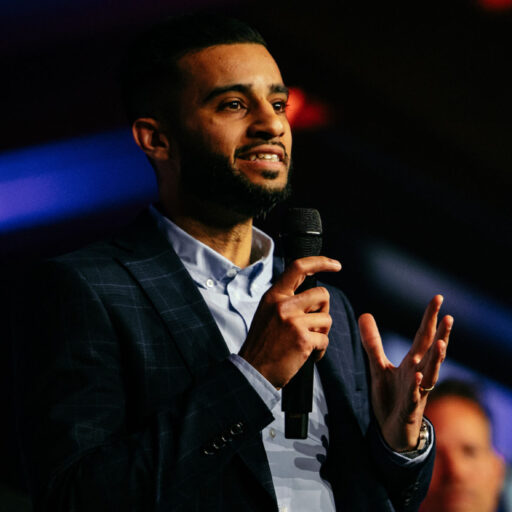
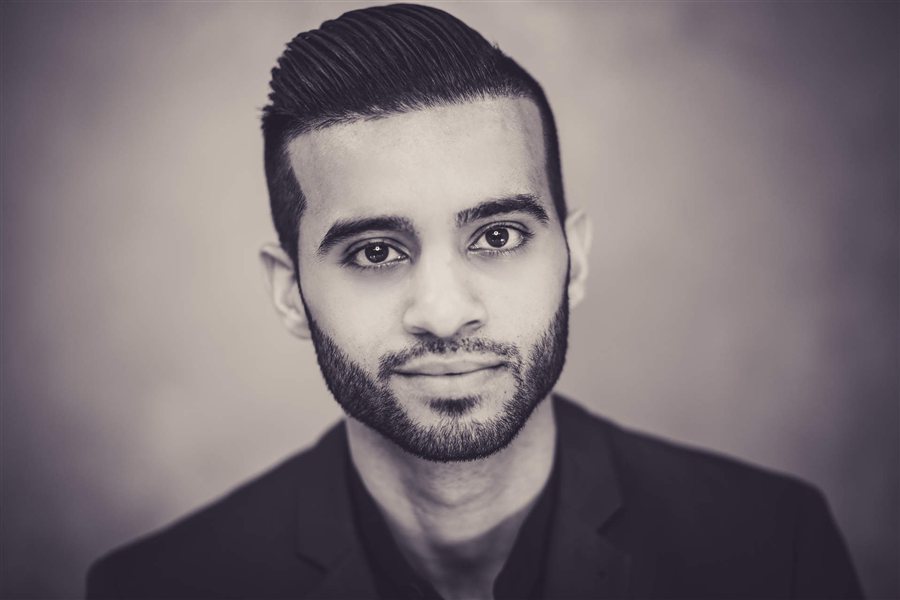
Your job interview isn't only about what you say, it's above all about how you say it. Research shows that non-verbal communication can account for up to 70% of our total communication. Non-verbal communication expert and founder of Body Signals Academy Ashwin Taneja explains how to approach this, in this first blog for Intermediair.
Picture it: a candidate who claims to be a natural leader, but stands with slumped shoulders, hands in their pockets, and barely makes eye contact. Their words say one thing, but their body language tells a different story. And that exact mismatch can be the difference between getting the job or not.
A Stronger Impression Through Non-Verbal Communication
Fortunately, a few simple adjustments to your non-verbal communication can immediately create a better impression. One powerful way to come across stronger and more convincing is by eliminating barriers.
I still remember a job interview I had, years ago. The two gentlemen conducting the interview asked me to take a seat while they went to get coffee. As I sat down, something caught my eye right away: there was a large speaker sitting exactly between me and their seats. It felt like an unnecessary barrier, an obstacle that could disrupt the interaction between us. So I subtly slid it to the end of the table, removing that barrier.
Remove Barriers Between You and the Other Person
When we find ourselves in an unsafe situation, our natural reaction is to protect our torso. That's not arbitrary; our torso protects our vital organs, and instinctively we know they're vulnerable. This survival mechanism is deeply rooted in us and unconsciously influences our body language, even in situations that aren't remotely life-threatening but that your brain may still register as danger - like a job interview. For centuries, humans and animals alike have developed reflexes to shield vulnerable parts in moments of stress or danger. Think of how someone instinctively crosses their arms over their stomach when they feel uncomfortable, or how animals make themselves smaller to protect vital organs when threatened.
This mechanism plays a role in job interviews too. The table itself already forms a natural barrier between your torso and the interviewer. That's true for everyone - but many candidates unconsciously widen that gap further by placing all sorts of things in front of themselves: a laptop, a notepad, a water bottle or a coffee cup. Although it might seem harmless, this creates a visual and psychological divide between you and the other person. It can make you come across as less approachable and unintentionally create distance, making the interaction feel less natural.
An Open Posture Helps Create a Good First Impression
An open posture helps create a good first impression. So make sure there's nothing unnecessary between your torso and the other person's. Don't place your coffee mug between your body and theirs, but to the side of your body, left or right of you, so no visual barrier is created.
Even your clothing can unconsciously play a protective role. A jacket that's fully buttoned up encloses your torso and can form a subtle barrier. So undo the button once you sit down. This not only prevents a stiff, formal posture, but also projects more ease and approachability. The same goes for your arms: crossing them blocks your torso and makes you look closed off and unapproachable. Keeping your arms and hands relaxed on the table creates the opposite effect. Your posture looks more open, which also makes the other person more likely to feel at ease.
In the interview I had, I noticed the effect of these adjustments. The conversation went really well, and I'm convinced that removing that barrier, the speaker, contributed to a more open conversation. While I can't say for certain it was the deciding factor, it almost certainly helped. And with good results too, because I got an offer from the company I'd wanted to work for for years!
Your Posture During the Interview
Beyond removing barriers, your overall posture determines at least as much about how you come across. I see it with almost every candidate: the moment tension rises, posture dips just slightly. Shoulders a touch forward, back a touch more hunched - a small difference, a big effect on how confident you look.
A few concrete things to watch:
- Sit upright, but not stiffly - there should still be some natural movement.
- Lean slightly forward while talking. That signals engagement, whereas leaning all the way back quickly reads as distant.
- Keep your feet planted firmly on the ground. Fidgeting or wrapping your legs around each other gives away restlessness, even if your words sound calm.
- Mirror the other person's posture gently. That happens naturally anyway when a conversation is going well, and consciously matching it a little reinforces that sense of rapport.
Eye Contact and Non-Verbal Communication
Eye contact is perhaps the most underrated part of non-verbal communication in a job interview. Too little eye contact looks uncertain or uninterested. Too much, without any break, feels pushy or forced.
What does work: making eye contact while you're listening, and letting it go now and then while you're thinking through your own answer. That looking away while formulating an answer is completely normal - your brain genuinely needs slightly fewer visual inputs to finish a thought. It only becomes a problem when you consistently look away the moment a tough question comes up, because interviewers often read that (rightly or wrongly) as doubt.
What Your Hands Give Away During a Job Interview
Hands are, after the face, the most visible part of your body language - and therefore also the most telling. Hands that sit visible and relaxed on the table look more open and trustworthy than hands that disappear under the table or stay buried deep in your pockets. Hidden hands unconsciously raise a little more distrust in the other person, simply because your body is giving away less.
At the same time, too much gesturing can also backfire: it distracts from what you're saying and can be read as nervousness. The sweet spot is calm, supporting gestures - hands that underline your story without stealing the show. Curious exactly what specific hand gestures give away, from crossed arms to fiddling with a pen? I go deeper into that in this article on the body language of gestures.
Common Body Language Mistakes in Job Interviews
Finally, here's a rundown of the signals I see go wrong most often - each one small on its own, but together they shape a large part of the first impression:
- Crossed arms. Might feel comfortable to you, but quickly looks closed off or defensive to the interviewer.
- A barrier between you and the interviewer. A laptop, bag or cup placed right in the middle of the table - see the first part of this article.
- Looking away at tough questions. Occasionally is normal, consistently raises doubt.
- Fiddling with a pen, ring or hair. A classic sign of rising tension that's noticed faster by others than by yourself.
- A slumped posture. Reads as disinterest, even when you're genuinely very interested in the content.
- A weak handshake, or avoiding one altogether. One of the very first non-verbal signals an interviewer registers, before a single word is said.
The good news: these are all habits, not fixed traits. Practise them deliberately a few times, for example during a phone call standing in front of a mirror, or in a mock interview with a friend, and they naturally become part of how you present yourself - even when the pressure of a real job interview kicks in.